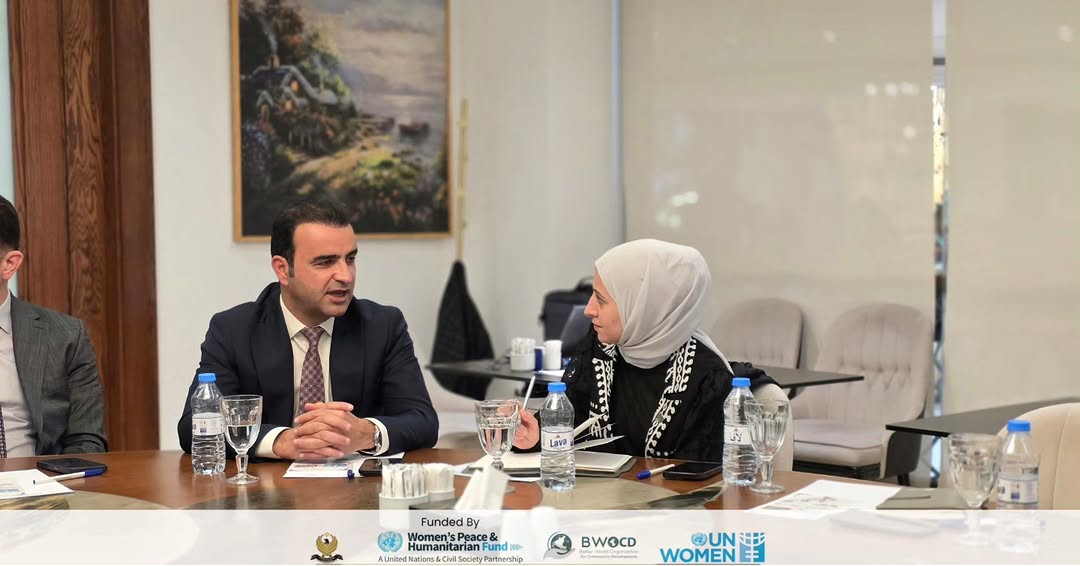
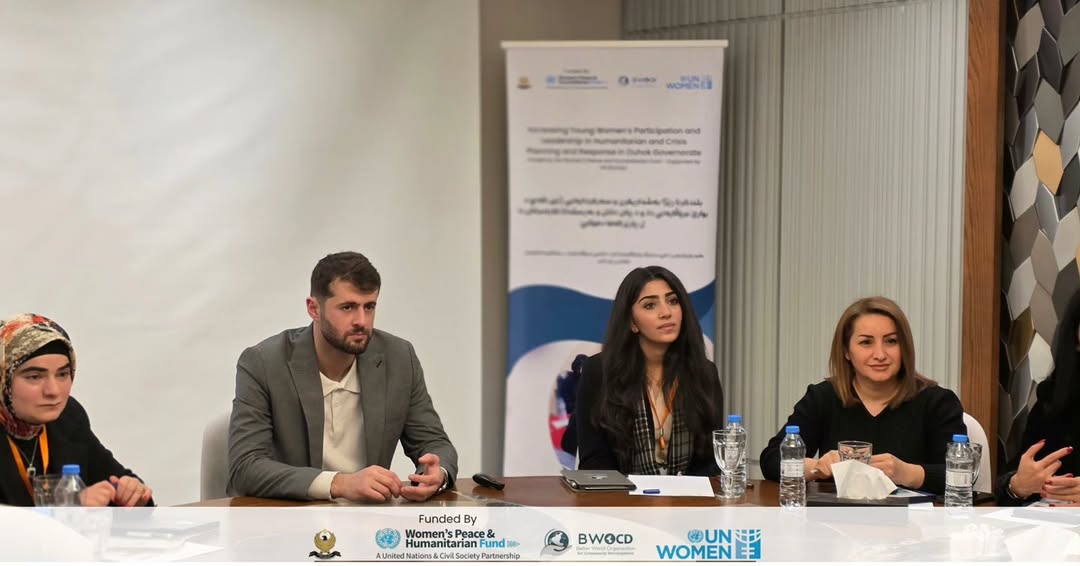
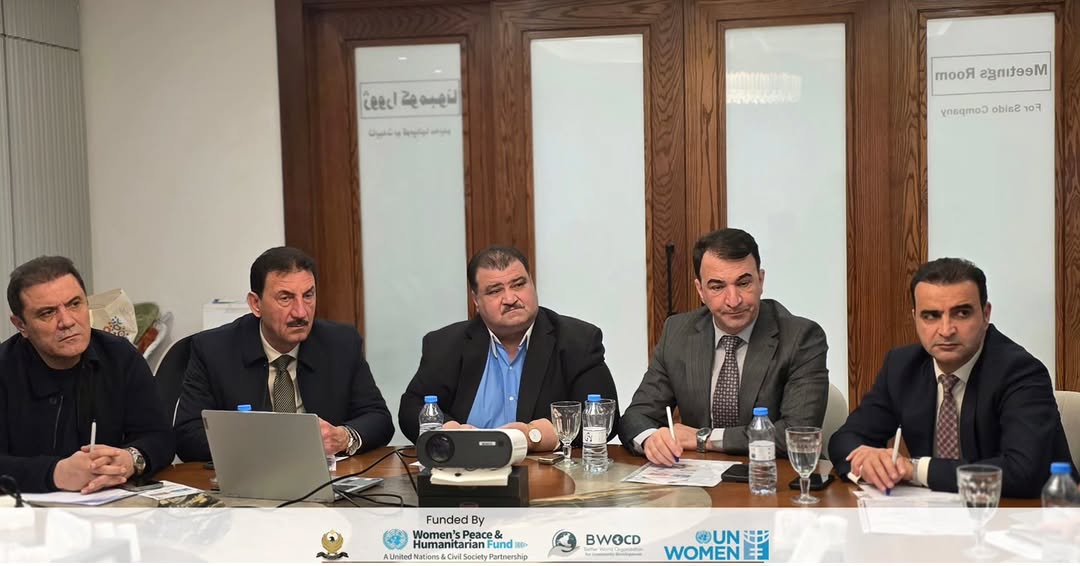
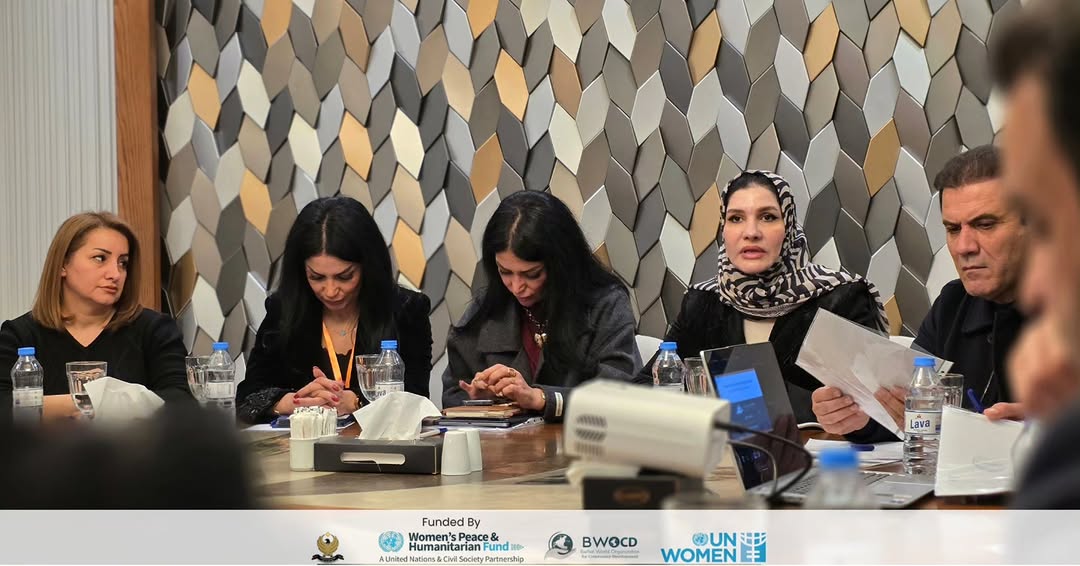
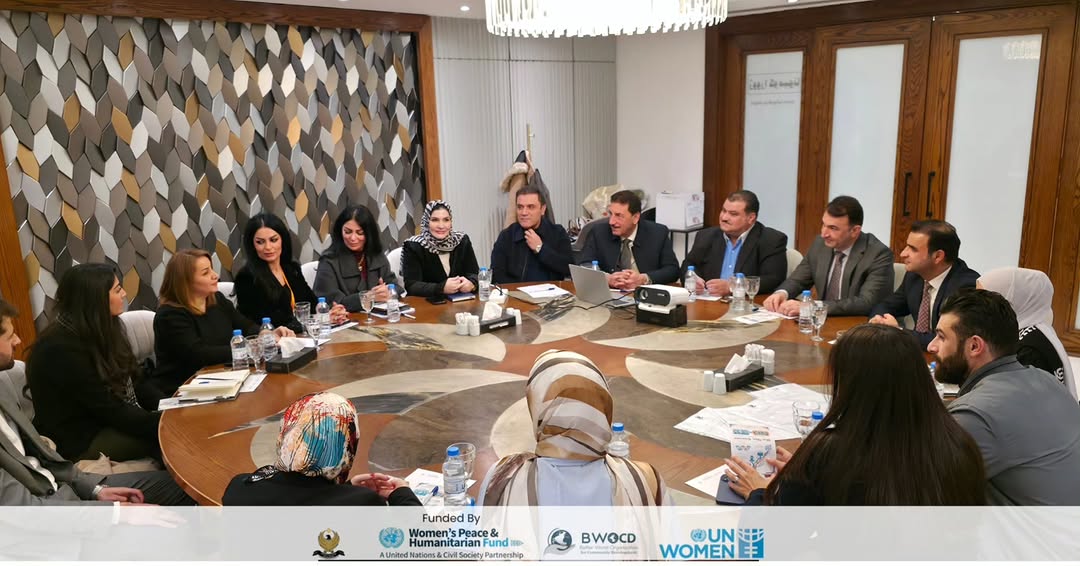
As part of the project “Increasing Young Women’s Participation and Leadership in Humanitarian and Crisis Planning and Response in Duhok Governorate,” the second coordination meeting with the Directorate of Migration and Crisis Response (DMCR) was held on Thursday, 29 January 2026. The meeting brought together mayors from Duhok, Amedi, Akre, Sumail, and Bardarash, the DMCR Director and staff, representatives from Better World Organization for Community Development (BWOCD), and five women committee representatives, in coordination with the Joint Crisis Coordination Center (JCC).
The meeting’s main focus was the formal presentation of committee formation letters in Duhok Governorate. It provided an opportunity to introduce the women-led committees to district authorities, discuss upcoming activities, and ensure coordination with local administrations. Opening remarks emphasized the importance of the project in promoting women’s leadership, volunteer engagement, and community resilience in disaster response.
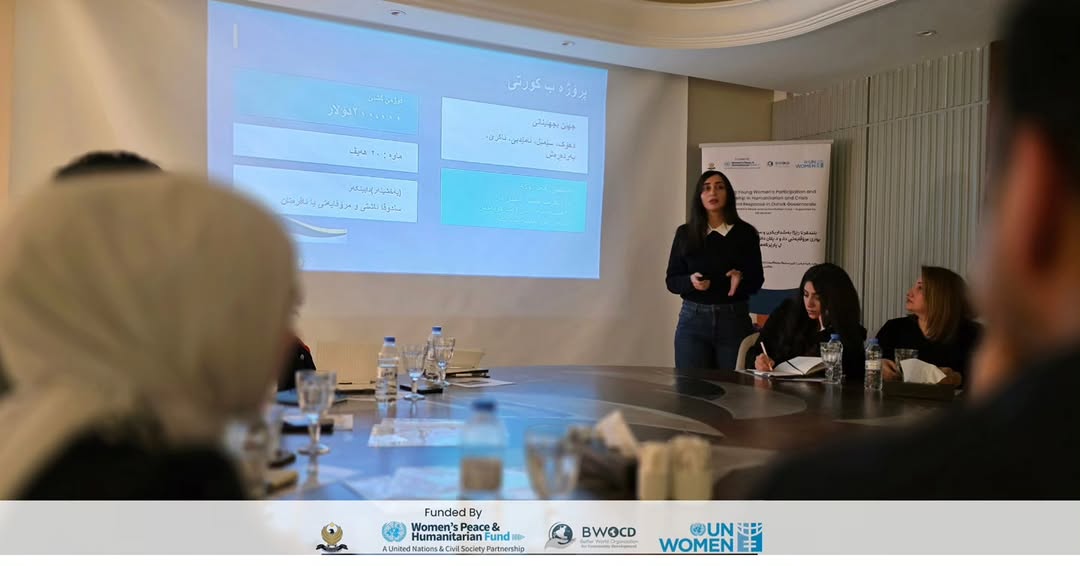
During the session, the Project Manager presented an overview of the project’s progress and outlined the next steps for implementation. The DMCR clarified that the committees would operate as volunteer bodies within district administrations, working closely with the mayors and local authorities to support emergency preparedness and response initiatives. This structure ensures that the committees are formally recognized while remaining connected to the needs of the communities they serve.
All participating mayors expressed strong support for the newly formed committees, highlighting the added value of trained women volunteers in strengthening community capacity during emergencies and disasters. The recognition of these committees reflects a broader commitment to inclusive governance and the integration of women in critical decision-making and operational roles at the district level.
This coordination meeting marked a key milestone in the formal recognition and integration of women-led committees within Duhok’s administrative structures. By fostering collaboration between local authorities, DMCR, and women volunteers, the project strengthens community preparedness, enhances disaster response, and contributes to a more resilient and inclusive approach to humanitarian action in the governorate.