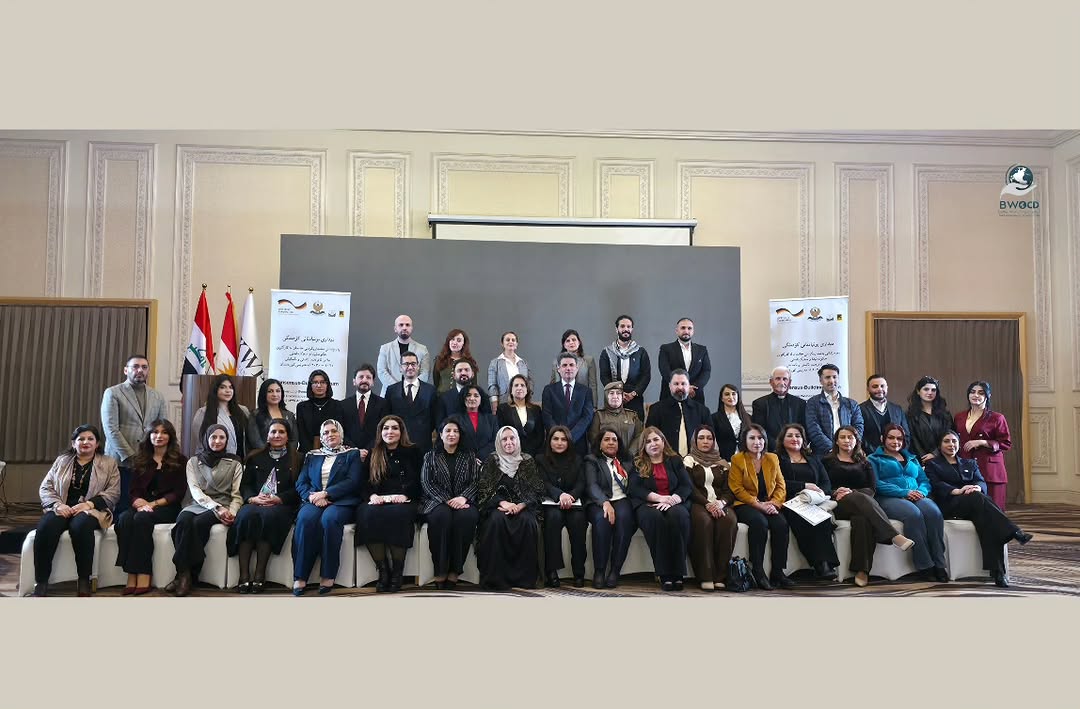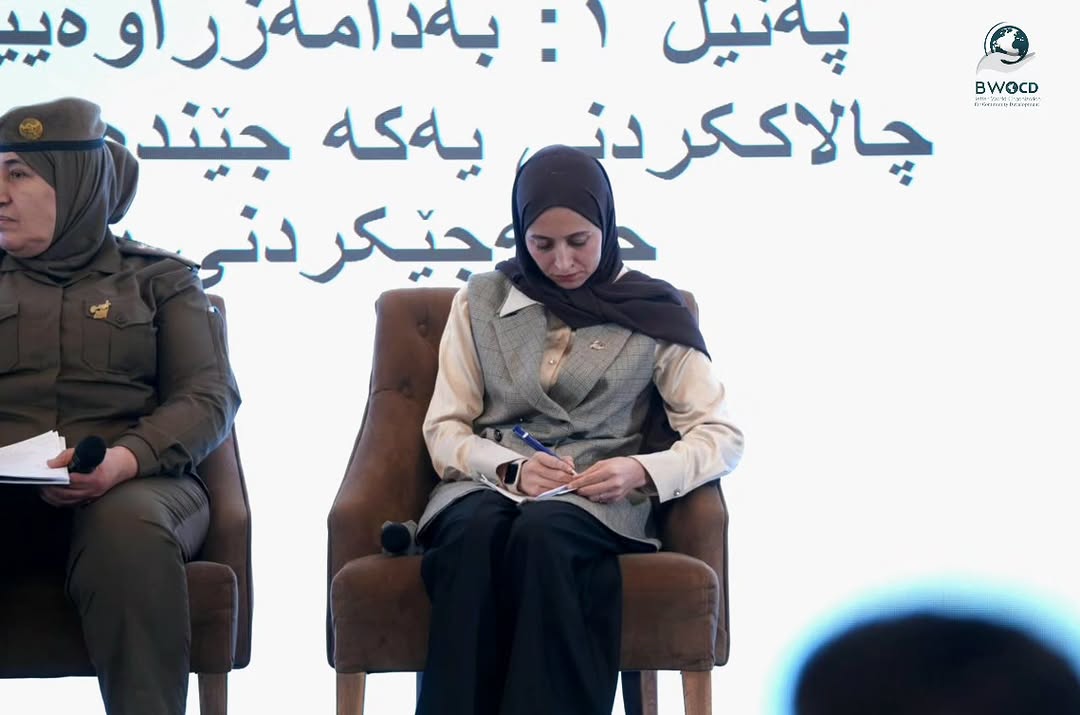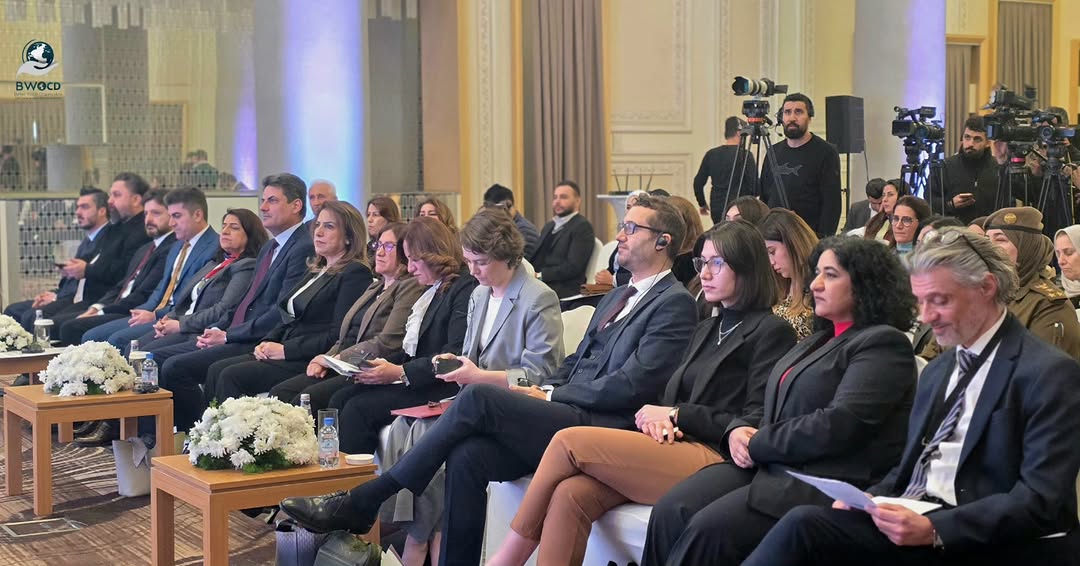
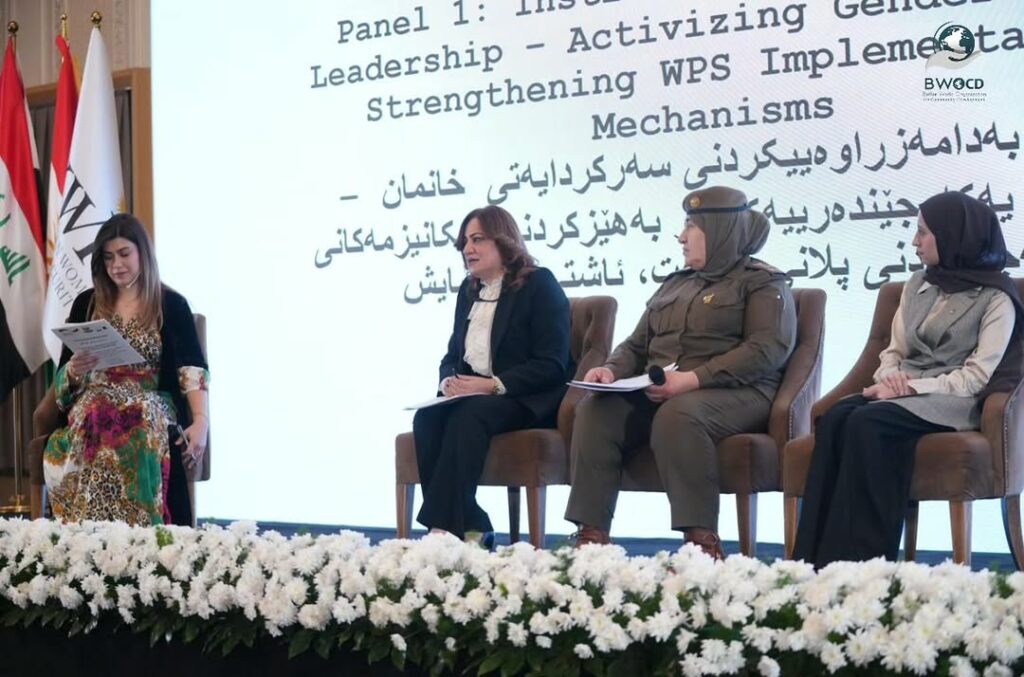
It was a great honor for Better World Organization for Community Development (BWOCD) that our Founder and Director was invited by the High Council of Women and Development (HCWD) to serve as a panelist in the Consensus-Building Forum on Advancing Women’s Participation in Governance and Leadership. The forum, held on 18 December 2025 in Erbil, was an important milestone under the KRG Women, Peace, and Security (WPS) Action Plan (2025–2030) and aimed to strengthen the role of women in leadership and decision-making across the Kurdistan Region.
The event brought together a diverse group of participants, including senior government officials, civil society representatives, development partners, and prominent women leaders from various sectors. The forum focused on the Participation Pillar of the WPS Action Plan, exploring ways to increase women’s representation in governance, improve institutional support for female leaders, and create sustainable pathways for meaningful engagement in decision-making processes. Discussions also highlighted the importance of strengthening Gender Units within ministries, ensuring that gender-sensitive policies are effectively implemented, and that women’s voices are actively included in shaping public policy.
As a panelist, BWOCD’s Founder shared insights and experiences from the organization’s work in empowering women at the community level, particularly through initiatives that build leadership skills, support women-led committees, and promote gender-responsive decision-making. By providing concrete examples of programs and outcomes, the contribution emphasized the need for collaboration between government bodies, civil society, and development partners to create inclusive spaces where women can influence policies and drive change.
The forum also provided an opportunity for participants to identify practical steps and recommendations to enhance women’s leadership across public institutions, ranging from mentorship programs and capacity-building initiatives to advocacy for structural reforms that remove barriers to participation. It reinforced the idea that advancing women’s participation in governance is not only a matter of equality but also a driver of more effective, transparent, and accountable decision-making processes.